

Quality management is a top priority for many organizations. Certifications such as ISO 9001, ISO 14001, and ISO 45001 require clear processes, up-to-date information, and demonstrable improvement.
Yet many organizations still rely on a combination of documents in SharePoint, Excel spreadsheets, and manual records. While these solutions help make information available, they do not always support the entire quality process.
After all, quality isn’t just about storing documents. It’s about whether employees are working with the right information, whether improvements are being tracked, and whether the organization has continuous insight into performance and risks.
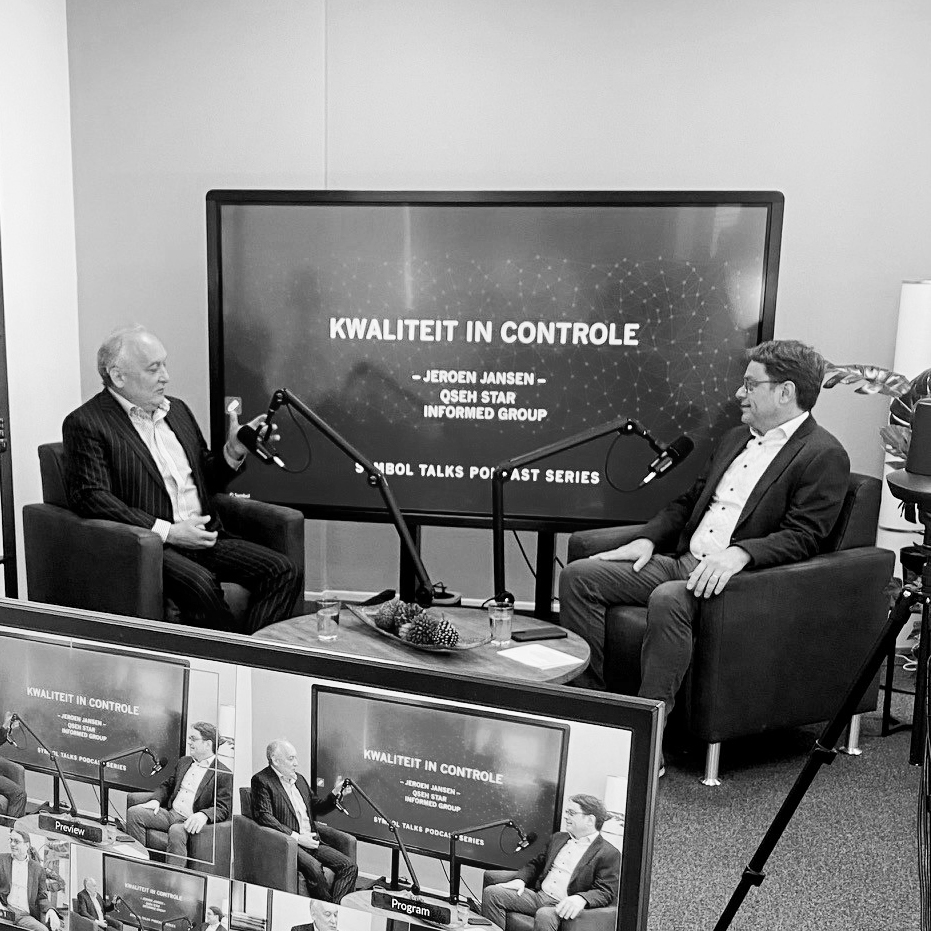
In the podcast “From Paper Checklists to Digital Quality Management”, Jeroen Janse, CEO of Informed Group, explains how organizations can make the transition from traditional document management to a future-oriented digital quality management process.
Click here to listen to the podcast.
Many organizations now make their documents available digitally. Solutions such as SharePoint offer effective ways to store, share, and manage documents, including version control and access rights. This lays an important foundation for making information available within the organization.
However, document management is not the same as quality management. A document management system focuses primarily on managing information: where documents are located, who has access, and which version is current. Quality management goes a step further and focuses on how employees use this information, carry out processes, and continuously improve.
A digital quality management system therefore not only brings documents together but also supports the entire quality process. It helps organizations manage procedures and work instructions, conduct audits and inspections, record and follow up on incidents and nonconformities, manage training and certifications, and monitor improvement actions.
This creates greater coherence between information, processes, and improvement activities. Employees have access to the right information when they need it, and organizations gain better insight into risks, performance, and areas for improvement.
The difference, therefore, lies not only in where documents are stored, but primarily in how employees work with them and how organizations learn and improve. An up-to-date work instruction is only valuable if employees can easily find, understand, and apply it. An audit only yields real results when findings are followed up on, actions are ensured, and improvements actually become part of daily practice.
In practice, quality departments often face the same challenges.
Information is scattered across different locations or systems. Actions are tracked in Excel. Reports must be compiled manually. As a result, quality management is time-consuming, and valuable information sometimes goes unused.
By digitizing quality processes, greater coherence is created between information, processes, and improvement activities. With a solution such as QSEH Star, organizations gain a single, centralized environment where employees always have access to up-to-date documents, procedures, and work instructions. Audits and inspections can be conducted digitally using fixed checklists, automatic follow-up, and clear reports, providing faster insight into risks and areas for improvement. Incidents and deviations are also centrally recorded, investigated, and linked to corrective actions, enabling organizations to learn and improve in a targeted manner. In addition, the platform helps safeguard knowledge and competencies by providing a clear overview of training, certifications, and employee competencies.
The result is a quality process that not only meets the requirements of standards and certifications but also helps organizations work more efficiently on a daily basis, better manage risks, and continuously improve.
The next step in quality management lies in making smarter use of the information that organizations collect on a daily basis. Digital systems ensure that more and more data is available on processes, incidents, audits, nonconformities, and improvement activities. The challenge, then, is not only to record this information but also to actually use it to make better decisions.
This is where AI can play a key supporting role. By analyzing large amounts of quality information more quickly, technology can help quality professionals gain insights faster and implement targeted improvements.
Consider, for example, finding relevant information more quickly within large volumes of documents and procedures, recognizing recurring patterns in incidents and nonconformities, or providing support for analyses and improvement processes. AI can also help give employees faster access to the knowledge they need to perform their jobs effectively.
The power of AI does not lie in replacing the knowledge and experience of quality professionals. Rather, it is the combination of human expertise and smart technology that creates the most value. AI helps make better use of information, reveal connections more quickly, and free up time for activities that truly contribute to improvement.
The combination of a well-designed digital quality management system and smart technology makes it possible to increasingly integrate quality into day-to-day work—not just as a mandatory process for certification or audits, but as a continuous improvement process that supports employees and helps organizations look to the future.
The future of quality management does not lie in more documents or more paperwork, but in providing smarter support for employees, processes, and decision-making. After all, quality is not achieved solely by documenting procedures, but primarily by ensuring that employees work with the right information, risks are identified in a timely manner, and improvements are actually implemented.
Organizations need a single, centralized environment where information, processes, and improvement activities converge. This provides greater control over quality, safety, and compliance and makes it easier to demonstrate compliance with standards and certifications, such as ISO 9001, ISO 14001, and ISO 45001.
With QSEH Star, Informed Group supports organizations—from SMEs to enterprises—in this digital transformation. From document management and work instructions to audits, inspections, incidents, training, and improvement processes: all key quality processes are brought together in a single central platform.
For example, QSEH Star helps organizations not only ensure quality but also continuously improve it.
Curious about how your organization can make the transition to digital quality management?
Listen to the podcast “From Paper Checklists to Digital Quality Management” or contact Informed Group.
From Paper Checklists to Digital Quality Management – Symbol Talks